Running a business means managing many tasks at the same time. From employee attendance and HR operations to finance, customer relationships, project management, and support requests, every department has its own responsibilities. When businesses handle these activities through separate systems, they often face scattered information, repetitive work, and difficulty staying organized.
This is where an all-in-one ERP software solution can make business operations simpler.
QTO ERP brings essential business functions together on one connected platform, helping organizations manage their daily workflows more efficiently and keep important information organized in one place.
Why Businesses Need an All-in-One ERP System
As a company grows, managing business operations manually becomes more difficult. Different teams may use different tools for attendance, employee records, finance, customer management, projects, and support.
This can create unnecessary complexity. Employees may spend time entering the same information in different systems, while management may struggle to get a clear picture of what is happening across the organization.
An ERP system for business management helps bring these processes together. Instead of switching between multiple platforms, teams can manage important business activities through a connected system.
QTO ERP is built around this idea: connect essential business operations and make them easier to manage.
Simplifying Employee Attendance Management
Attendance is one of the most important everyday HR tasks. Tracking clock-ins, clock-outs, breaks, shifts, overtime, and attendance corrections can become complicated as the workforce grows.
QTO ERP provides an attendance management system that helps organize these activities in one place.
Employees can record their attendance through simple clock-in and clock-out actions, while break timings and attendance records remain structured. If an employee misses an entry or records incorrect information, they can request an attendance correction.
This creates a clearer attendance workflow and reduces the need for unnecessary manual follow-ups.
Making HRMS More Organized
Human resource teams manage much more than attendance. They also need to maintain employee information, organizational structures, offices, work schedules, and workplace policies.
With QTO ERP's HRMS software, businesses can organize important employee and workforce information through a centralized platform.
Instead of keeping employee-related information across multiple files and systems, HR teams can manage their operations in a more structured environment.
A connected employee management system can also help businesses maintain consistency as their workforce and organizational requirements continue to grow.
Managing Finance More Efficiently
Finance is another core part of every business. Financial activities need to be organized carefully because they directly affect business planning and decision-making.
When financial information is managed separately from other business operations, teams may have to spend additional time collecting and matching information.
QTO ERP brings finance management into the same ERP environment. This gives businesses a more connected way to manage financial processes alongside their other operational activities.
Having finance within the same platform can help reduce information silos and provide businesses with a more organized approach to their financial workflows.
Building Better Customer Relationships with CRM
Customers are at the center of business growth. Sales teams need an organized way to manage customer information, leads, follow-ups, and ongoing interactions.
QTO ERP includes CRM software capabilities to help businesses manage customer-related activities more effectively.
Instead of keeping customer information in separate spreadsheets, emails, or disconnected tools, teams can organize their customer workflows through a centralized platform.
A connected CRM approach can help sales teams maintain better visibility of customer activities while keeping important information accessible within the broader business system.
Keeping Projects and Tasks on Track
Managing projects involves multiple tasks, deadlines, team members, and responsibilities. Without a structured workflow, it can become difficult to understand what has been completed, what is pending, and who is responsible for a particular task.
QTO ERP helps businesses bring project and task-related activities into their overall operational workflow.
This allows teams to stay more organized and maintain better visibility over ongoing work. Instead of relying entirely on scattered messages or separate task-management tools, businesses can manage their work through a connected ERP environment.
Managing Support Through Ticketing
Customer and internal support requests are another area where businesses need a clear workflow.
When requests are received through emails, messages, or informal communication, important issues can easily be missed. A structured ticketing management system gives teams a better way to record, organize, and manage support requests.
QTO ERP brings ticketing into the same business ecosystem, helping teams keep track of issues and manage support tasks through an organized process.
This can make it easier for teams to know what requires attention and keep support activities moving forward.
Connecting Business Operations in One Platform
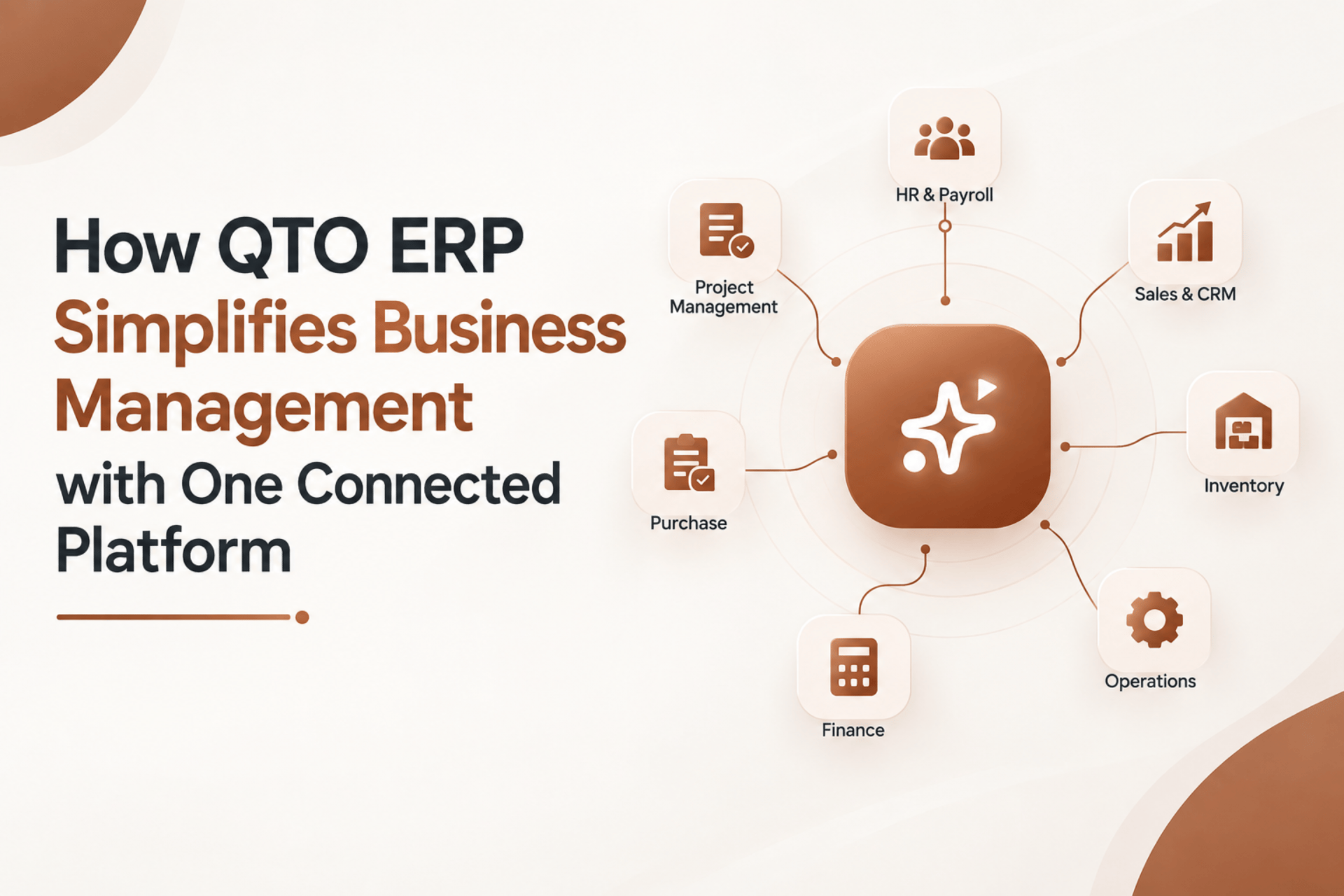
The biggest advantage of an ERP system is not simply having multiple features. It is the ability to bring different business functions into one connected environment.
With QTO ERP, businesses can manage areas such as:
Attendance Management
HRMS
Finance
CRM
Project and Task Management
Ticketing
Each of these functions plays an important role in daily operations. When they are managed through one platform, businesses can reduce their dependence on multiple disconnected systems.
This connected approach can also improve visibility, reduce repetitive work, and create more consistent workflows between teams.
Supporting Business Growth with Better Workflows
As businesses grow, their processes need to become more structured. Adding more employees, customers, projects, and financial activities can quickly increase operational complexity.
An ERP software solution helps businesses create a foundation for managing this growth.
QTO ERP focuses on bringing essential business processes together so teams can spend less time dealing with disconnected systems and more time focusing on their actual responsibilities.
The objective is not simply to digitize individual tasks. It is to create a more connected way of managing the business.
Conclusion
Modern businesses need more than individual software tools. They need systems that can work together and support the way different departments operate.
QTO ERP brings attendance, HRMS, finance, CRM, project management, and ticketing together on one connected platform. By organizing these important functions in one place, businesses can simplify workflows, improve visibility, and reduce operational complexity.
As a business grows, having a connected ERP system can make it easier to manage everyday operations and build a more organized foundation for the future.